
Sex Offender Checks in Clatsop County
Begin with the government source that answers the question at hand. The Oregon Sex Offender Online Search is the public view of records managed by the Oregon State Police Sex Offender Registration Section. It can help with neighborhood awareness and personal or family safety. It does not replace a court file, and it does not predict what anyone will do.
A blank result needs care. Oregon's public-release rules generally require online publication for Level 3 registrants, while people classified at lower levels may still have active reporting duties. Spelling, a move, or a delayed update can also affect a result. Use the official agency channels when a statutory or compliance question remains.
Why Clatsop Results Can Be Limited
Oregon classifies registrants by risk, not by a simple federal-style duration label. Classification controls the reach of public notice. Level 3 information must be placed on the public internet site. Level 2 notice can reach schools, child care providers, neighbors, or other people when the supervising agency finds the person poses a risk to them. Level 1 information receives narrower law-enforcement treatment.
That design explains why no public match does not prove there is no registration record. The public interface is intentionally narrower than the data available to law enforcement. Do not use a missing profile as a certificate, clearance, or statement about a person's full history. Classification can also change only through the process Oregon law provides. A person reaching an eligibility date does not vanish from the public system by the mere passage of time.
The OSP Sex Offender Registration program page explains the state program and its reporting resources.
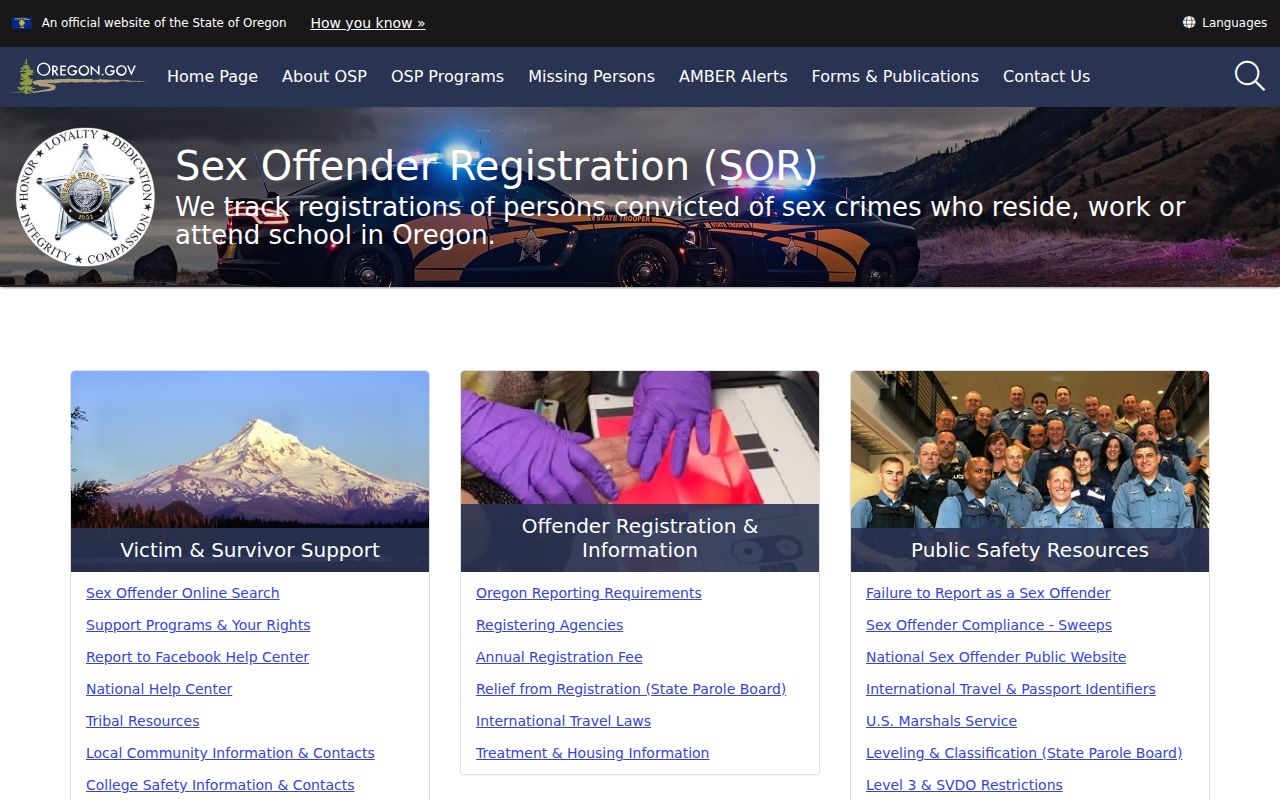
The program page is the right source for rules and agency contacts, while the separate search interface supplies public profiles. It also gives readers a current state contact when the dynamic public search cannot answer a classification or reporting question.
How to Search the Oregon Registry
The dynamic application did not expose every control to accessible inspection, so exact radius and dropdown labels should be read on the live form rather than guessed. Use the visible search options and keep the query broad enough to catch spelling differences.
- Open the official Oregon Sex Offender Online Search and read its use warning.
- Enter only the location or identity details the live interface requests.
- Review the risk level, offense, location, and registration data shown on any match.
- Use NSOPW for a cross-state question, or contact OSP and a listed Clatsop County registering agency for reporting questions.
| Starting detail | Official route | What it answers |
|---|---|---|
| Oregon name or place | Oregon public registry | Profiles Oregon law permits online |
| Multiple states | NSOPW | Participating government registries |
| Reporting status | OSP or local registering agency | Compliance and statutory questions |
The official Oregon registry search is the first public search channel.
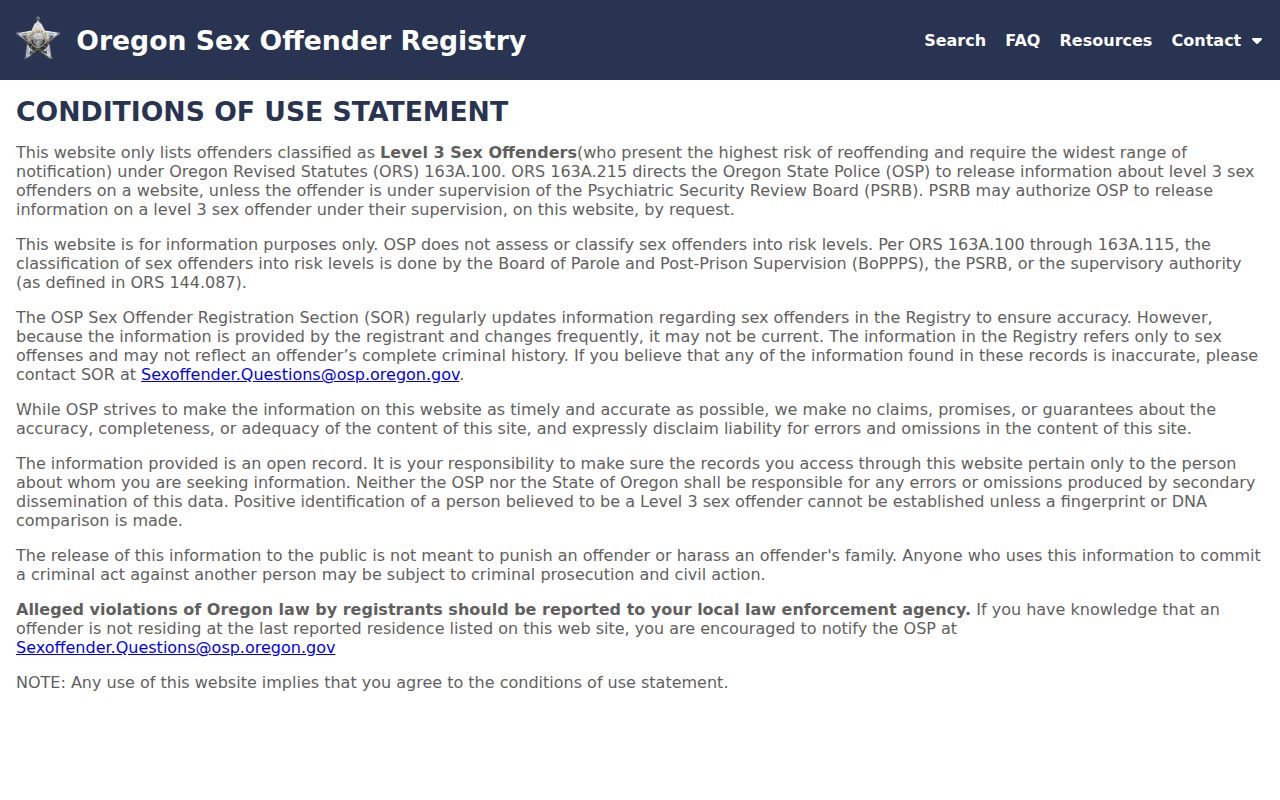
The screenshot documents the government search interface without reproducing any registrant's private identity details.
Clatsop County Reporting Agencies
Oregon State Police publishes a county-by-county list of registering agencies. A person with a reporting duty should use a listed agency and confirm its hours and intake procedure before arriving. The list is also useful when a member of the public needs to report suspected failure to comply. It is not a second public profile database.
OSP's Sex Offender Registration Section accepts program questions at askSOR@osp.oregon.gov or 503-934-1258 on weekdays from 8:00 a.m. to 5:00 p.m. Suspected noncompliance belongs with local law enforcement or OSP. An immediate threat belongs with 911. Online confrontation is never the proper response.
The official registering-agency directory identifies Clatsop County reporting locations.
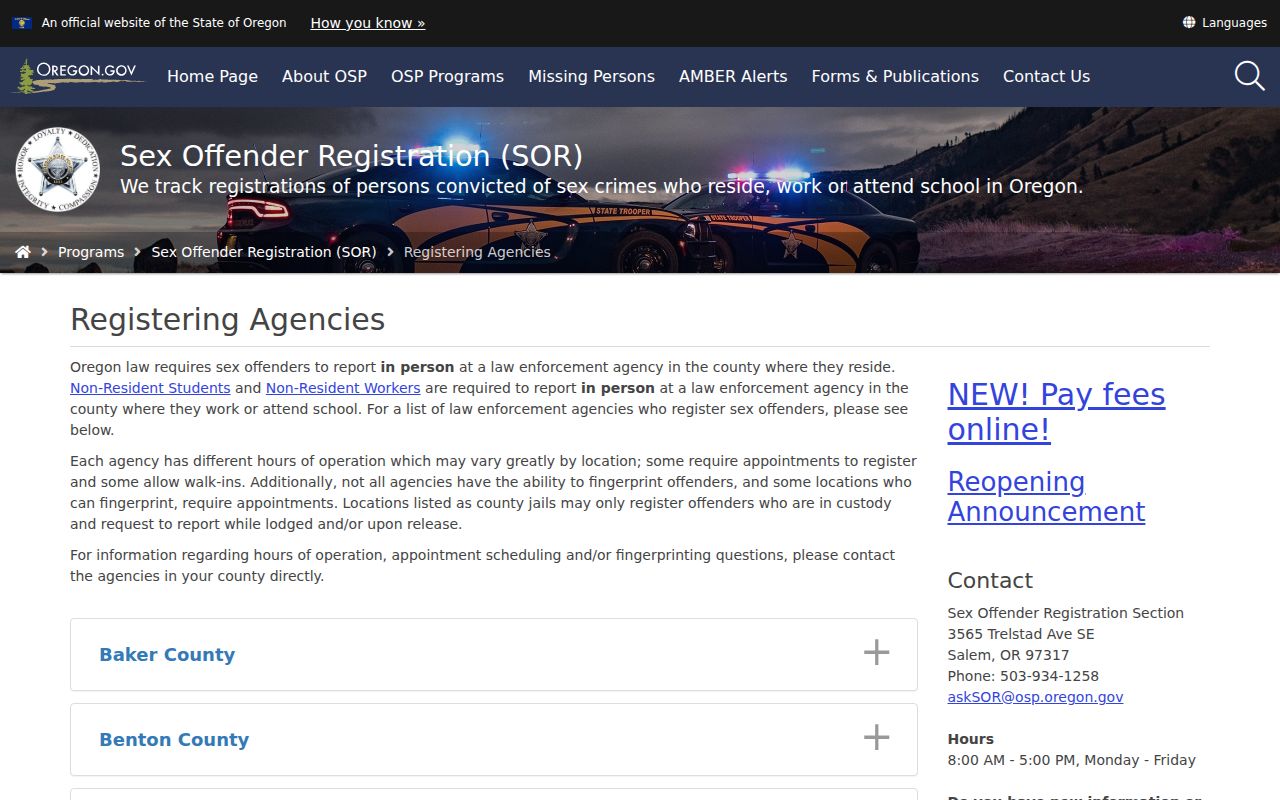
This directory connects statewide rules with the local office that receives required reports.
Inside a Clatsop Registry Profile
A public profile is a disclosure record, not a complete criminal history. Oregon law permits categories that can identify the registrant and explain the basis and status of registration. Exact live labels may change, so the portal controls.
| Identity | Name and aliases permitted for public release |
|---|---|
| Appearance | Photograph and physical description when published |
| Location | Location information Oregon law permits online |
| Offense | Qualifying conviction or offense information |
| Status | Risk classification and registration information |
A profile does not supply the full sequence of charges, motions, judgment changes, or later court action. Those belong to the originating court file. Readers who need the prosecution outcome should consult the official court record rather than infer it from one registry entry.
Oregon Reporting Deadlines in Clatsop
Reporting duties are event based. Oregon generally requires annual reporting within ten days of a registrant's birthday. A move, name change, employment change, school change, or other covered event can also trigger a ten-day reporting window. International travel requires advance notice, generally at least 21 days.
These deadlines are compliance duties, not public-profile update promises. A person who has a legal reporting question should confirm the rule with OSP or a registering agency. A member of the public who sees an apparent mismatch should provide the facts to law enforcement and let the agency verify them.
Oregon Registration Levels and Requirements
Levels express assessed risk and determine notification scope. They do not create a universal automatic end date. Oregon law also provides petition processes for some people, but the first eligible date is only a point when relief may be sought. A court or the Board must make the required finding.
| Risk level | Public visibility | Relief timing |
|---|---|---|
| Level 1 | Limited notification | Petition may be possible after five years when eligible |
| Level 2 | Targeted community notice may occur | Petition may be possible after ten years when eligible |
| Level 3 | Mandatory internet publication | Not an automatic expiration; legal findings control |
Serious-offense rules and sexually violent dangerous offender findings can restrict relief. Readers should not translate a five- or ten-year petition point into an assured removal date.
Search Beyond Clatsop County
State borders matter along the coast and Columbia River. NSOPW, the National Sex Offender Public Website, searches participating government registries through one federal interface. It is the proper official cross-state layer, not a commercial people-search product.
The National Sex Offender Public Website can broaden a search after Oregon's portal is checked.
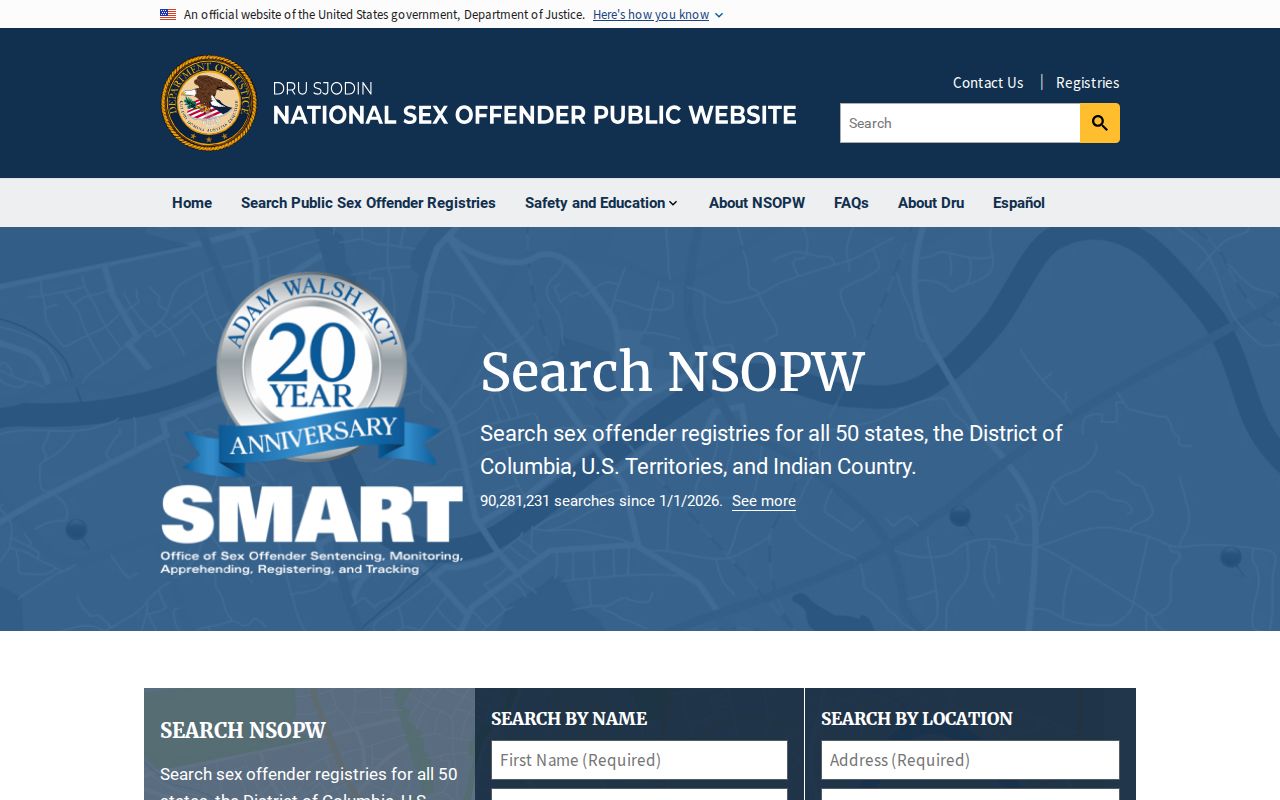
A national no-result still must be read in light of each participating jurisdiction's public-disclosure rules.
Clatsop Registry and Court Records
The registry and a criminal court file answer different questions. OSP's system addresses registration, classification, and public notification. A court register documents filed charges, hearings, pleas, judgment, and sentence. Later amendments or relief may appear in the court file before every downstream system is reconciled.
When accuracy matters, compare the registry entry with the certified judgment from the court that handled the case. Contact OSP about a registry-data question. Ask the court clerk about the judgment and later orders. The sheriff or another registering agency can address local reporting procedure, but its counter is not a substitute for the statewide public search.
Do not treat a screenshot, cached page, or third-party copy as the official current record. Save the search date and return to the government source when a decision or safety plan depends on current information. A profile speaks only to the categories Oregon permits it to show.
Community Notification and Lawful Use
Registry access supports community awareness, safety planning, and informed contact with public agencies. Risk levels guide how Oregon authorities notify the public. They are not a license for private punishment, harassment, threats, or vigilantism.
Use registry information lawfully: ORS 163A governs disclosure and misuse; threatening, intimidating, or harassing a registrant or household can lead to criminal consequences.
Report an urgent safety threat to 911. Send suspected reporting violations to local law enforcement or OSP with specific, factual details. Avoid publishing copied profile data, confronting the person, or drawing conclusions beyond what the official record states.